


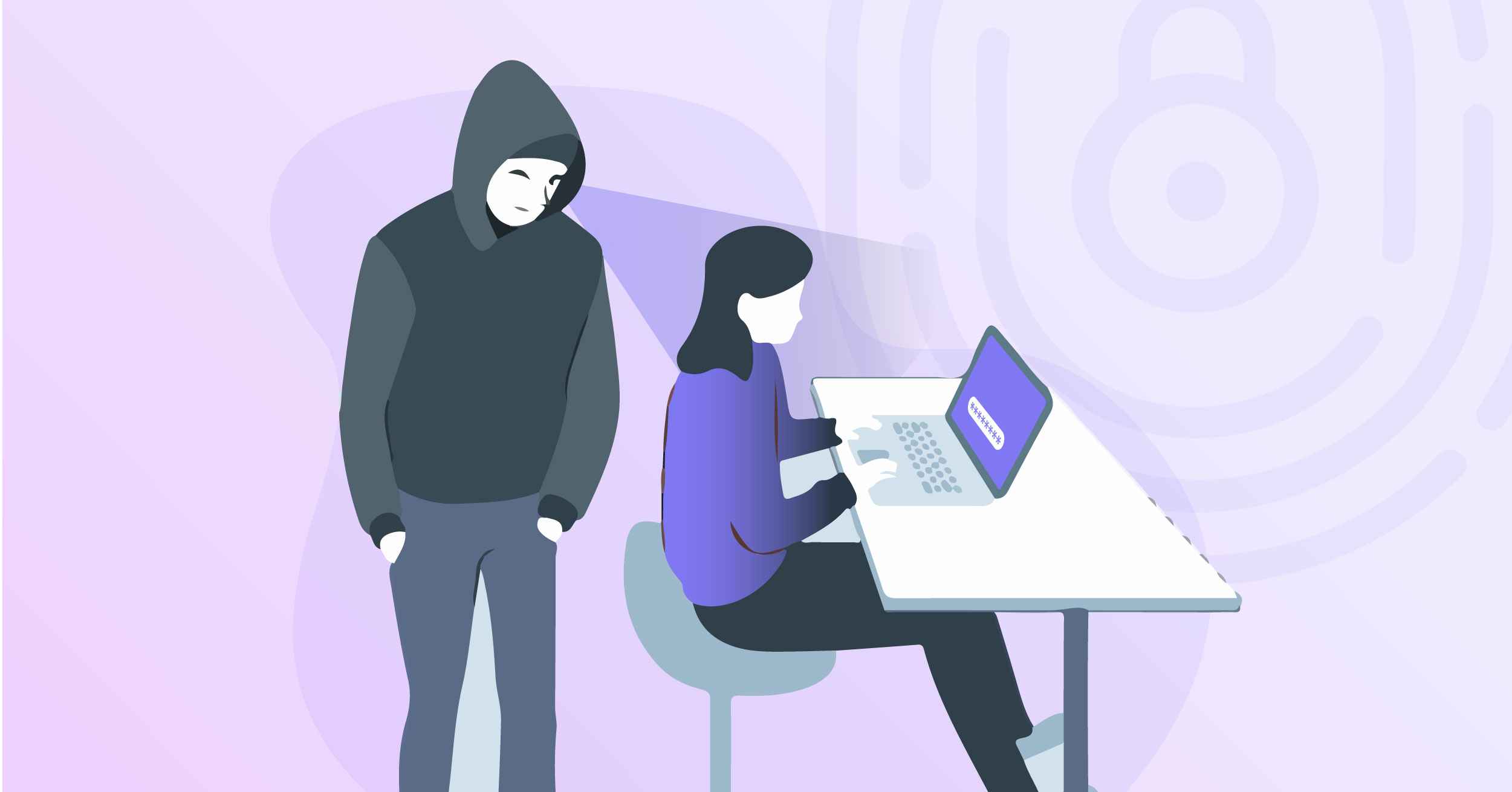
Imagine you’re sitting at a busy coffee shop, casually checking your emails or transferring money online. You feel safe since your device is password-protected, but lurking nearby could be someone watching your every keystroke, ready to steal your private information without you even noticing.
This subtle but highly effective attack is called shoulder surfing, and it’s a cybersecurity threat that’s quietly growing in 2025.
With more people working remotely, banking online, and using public spaces for sensitive activities, the opportunities for shoulder surfers have exploded.
But don’t worry!
In this complete guide, we’ll break down exactly what shoulder surfing is, how these attacks work, real-world examples you might recognize, and most importantly, how you can protect yourself against it.
Ready? Let’s get started!
What Is Shoulder Surfing? (Explained Simply)
At its core, shoulder surfing refers to the act of secretly observing someone’s private information, typically by looking over their shoulder or from a nearby vantage point, hence named shoulder surfing. The goal is to steal sensitive information, such as PINs, passwords, credit card numbers, or even personal messages.
The term was first popularized in the 1990s, when criminals lurked near ATMs, memorizing PIN codes as people entered them. Back then, the threat was mostly physical. Fast-forward to 2025, shoulder surfing has evolved with technology.
Now, attacks happen through direct observation, hidden cameras, smartphone recordings, and even compromised through surveillance systems.
What makes shoulder surfing particularly dangerous is how low-tech yet highly effective it is. Unlike hacking a network or installing malware, all a shoulder surfer needs is a good line of sight and a bit of patience.
As more transactions, communications, and logins happen in public settings, understanding and preventing shoulder surfing has never been more critical.
How Does Shoulder Surfing Work?
Shoulder surfing may sound simple, but the methods used can be surprisingly sophisticated. Here’s a closer look at how it unfolds:
Physical Observation Techniques
These techniques include the following:
- Direct Spying: The classic, standing close enough to watch you input sensitive information, either openly or covertly.
- Shoulder-Surfing at a Distance: Skilled attackers might use reflective surfaces like windows, mirrors, or even smartphone screens to catch glimpses without being obvious.
- Binoculars or Zoom Lenses: In some cases, attackers use tools such as binoculars or small cameras to capture information from a distance, particularly in airports, cafes, or corporate events.
Digital Observation Techniques
As we told you earlier, with the technological advancements, cybercriminals use more sophisticated techniques, such as:
- Recording Devices: Miniature cameras, sometimes hidden in ordinary objects like pens or glasses, can record typing sessions.
- Smartphone Recording: Someone might pretend to be texting or browsing while secretly recording your device screen.
- Public Wi-Fi Eavesdropping: While technically different from pure shoulder surfing, unsecured public Wi-Fi networks can expose what you’re typing or sending online.
Why Is Shoulder Surfing So Effective?
Shoulder surfing relies on two main factors:
- Human Nature: Most people trust public spaces more than they should and underestimate nearby threats.
Interesting Fact:
According to Statista, a U.S. survey conducted between July and October 2024 revealed that most people still feel relatively secure using public Wi-Fi. In fact, only 6% of respondents said they felt completely unsafe when accessing networks in public spaces.
- Environmental Factors: Crowded places make it easy for attackers to blend in and observe without drawing attention.
This widespread casual behavior creates a golden opportunity for attackers.
Common Real-Life Examples of Shoulder Surfing Attacks
To truly grasp the threat, let’s examine some everyday situations where shoulder surfing occurs.
ATMs and Payment Kiosks
This is the classic scene, you’re at an ATM, withdrawing cash. A person nearby pretends to be waiting in line, but they are actually memorizing your PIN. Later, they might steal your physical card and access your account.
Airports, Cafes, and Co-Working Spaces
Frequent travelers and remote workers often log into sensitive accounts while sitting in public places. Airports, with their tight spaces and distractions, are a hotspot for shoulder surfers. A quick glance while you’re booking a hotel room or paying for coffee could give someone access to your email or bank account.
Remote Work Vulnerabilities
With remote work becoming the norm, shoulder surfers aren’t just strangers. Housemates, nosy co-workers in shared spaces, or even people on video calls, could become inadvertent threats if you’re careless with your screens.
Social Engineering Enhancements
Sometimes, shoulder surfing is paired with social engineering. For example, after observing your login ID, an attacker might use phishing attack techniques to trick you into revealing your password.
Who Are the Typical Targets of Shoulder Surfing?
Not everyone faces the same level of risk. Here are the most vulnerable groups of people:
- Everyday Consumers: Anyone entering passwords, viewing private information, or handling transactions on smartphones, tablets, or laptops in public spaces.
- Remote Workers: Freelancers, consultants, and employees working outside traditional office environments are particularly exposed.
- Business Travelers: Executives carrying sensitive corporate data are prime targets at airports, lounges, and conferences.
- University Students: Students entering personal details on laptops and devices in libraries and cafes.
- Healthcare Workers: Doctors or nurses accessing patient records in semi-public hospital areas.
A study in the UK found that 72% of commuters reported observing someone shoulder surfing, according to McAfee. Furthermore, a 2017 study by LMU Munich revealed that 67% of shoulder surfing incidents occur on public transportation, according to Proton.
Consequences of Falling Victim to Shoulder Surfing
You might think, “It’s just someone glancing at my screen, how much harm could that cause?” Unfortunately, even a quick glance can lead to devastating consequences. Here’s what’s at stake:
Identity Theft
Shoulder surfers often gather enough information, such as full names, addresses, birthdates, and partial account numbers, to commit identity theft. Once they have a foothold, they can open credit cards, take out loans, or file fraudulent tax returns in your name.
According to Javelin Strategy & Research’s 2024 Identity Fraud Study, identity fraud resulted in a 13% increase in overall losses for U.S. adult victims in 2023, causing losses of nearly $23 billion.
Financial Fraud and Stolen Funds
Capturing a PIN code at an ATM or a credit card number while you’re entering it online can lead to direct financial theft. In many cases, victims don’t realize what happened until days or even weeks later, when unauthorized transactions appear.
Business Data Leaks and Corporate Spying
Shoulder surfing doesn’t only target individuals—companies are at risk too. If an attacker captures login details for a corporate VPN, internal portal, or confidential documents, the financial and reputational damage could be catastrophic.
Personal Account Takeovers
Emails, social media accounts, and cloud storage are goldmines for cybercriminals. A stolen password could lead to blackmail, public humiliation, or even ransom demands, if personal photos or sensitive messages are accessed.
Emotional and Reputational Damage
Beyond financial loss, being a victim of shoulder surfing can feel like a personal violation. Victims often experience:
- Anxiety over future security
- Loss of trust in public spaces
- Fear of using technology in crowded environments
In short, the consequences ripple far beyond a single password, disrupting every part of your digital life.
Warning Signs You Might Be a Victim of Shoulder Surfing
Shoulder surfing often happens quickly and without immediate consequences, which makes it hard to detect. However, there are subtle warning signs you should watch for:
Suspicious Behavior Around You
- Someone is hovering unusually close while you’re entering information.
- Individuals positioning themselves behind you at ATMs, payment terminals, or airport lounges.
- Strangers who seem to be “lingering” without any clear reason.
Unexpected Account Login Attempts
- Receiving security alerts about new device logins you don’t recognize.
- Password reset notifications you didn’t initiate.
According to Cloudflare, around 41% of successful login attempts by real users involve credentials that have already been leaked or obtained through physical or visual tactics.
Unusual Banking Activities
- Small, unexplained withdrawals from your account
- New transactions on your credit card that you don’t recognize
- Alerts about changes to payment methods
Security Questions Being Bypassed
If someone has observed personal information like birth dates, mother’s maiden names, or pet names while shoulder surfing, they may successfully answer security questions to reset your passwords.
💡 Pro tip: Set up account monitoring and fraud alerts through your bank or service providers. Early detection is key to limiting the damage.
How to Protect Yourself from Shoulder Surfing (Proven Tips for 2025)
Preventing shoulder surfing doesn’t require complex technology — it’s about combining smart habits with a few practical tools. Here’s how to fortify yourself:
#1: Use Privacy Screens
A privacy screen is a thin filter placed over your laptop or smartphone screen that narrows the viewing angle. Unless someone is directly in front of your device, they’ll see only a dark or blurry display.
In fact, during global trials, a white hat hacker managed to visually capture sensitive information in 91% of attempts, which proves just how easily data can be compromised without any digital breach.
Popular brands like 3M and Kensington offer high-quality privacy filters tailored for different devices.
#2: Be Mindful of Your Surroundings
Before logging into accounts or entering sensitive data:
- Choose seating against a wall or a corner.
- Position your screen away from crowds.
- Notice anyone suspiciously close or trying to observe.
Simple environmental awareness can dramatically reduce your risk.
#3: Shield Your Screen and Keypad
Physically shield your hand when entering PINs or passwords. Cup your hand over the keypad at ATMs, checkout counters, or when unlocking your phone. Even using your body as a barrier can discourage casual shoulder surfers.
#4: Avoid Public Wi-Fi for Sensitive Transactions
Public Wi-Fi hotspots are notoriously insecure. If you must use them:
- Connect to a reliable VPN (Virtual Private Network.)
- Avoid accessing bank accounts or entering passwords.
- Use mobile data for critical tasks instead.
A VPN encrypts your traffic, making it much harder for anyone snooping on public networks to steal your information.
#5: Enable Two-Factor Authentication (2FA)
Even if someone steals your password, two-factor authentication (2FA) adds an extra layer of defense. Typically, it requires a one-time code sent to your mobile device or generated by an app like Google Authenticator.
Fun Fact: Research from Microsoft shows that using 2FA blocks 99.9% of automated cyberattacks.
#6: Regularly Monitor Your Accounts
Set up:
- Login alerts: Get notified if someone signs into your accounts.
- Transaction alerts: Know immediately if there’s unusual banking activity.
Quick action can prevent shoulder surfing incidents from escalating into full-blown identity theft.
#7: Train Employees and Teams (for Businesses)
If you’re managing a business, regular cybersecurity awareness training is crucial. Topics to cover:
- Recognizing physical threats like shoulder surfing
- Safe device usage policies for remote workers
- Role-playing exercises to spot suspicious behavior
Investing in employee training reduces the overall attack surface and strengthens the company’s security culture.
Shoulder Surfing vs Other Social Engineering Attacks
While shoulder surfing is a clear-cut visual attack, it often gets lumped together with broader social engineering tactics. To protect yourself fully, it’s helpful to understand how it stands apart and where it overlaps with other cyber threats.
What Is Social Engineering?
Social engineering refers to manipulating people into revealing confidential information or performing actions that compromise security. Unlike brute-force hacking, it targets human psychology rather than technology itself.
Common types include:
- Phishing: Tricking individuals into clicking malicious links or giving up credentials through fake emails, texts, or websites.
- Pretexting: Building a fabricated scenario (e.g., posing as IT support) to extract information.
- Baiting: Offering something enticing, like free software downloads, that hides malware.
- Tailgating: Physically following authorized individuals into restricted areas without proper credentials.
Key Differences Between Shoulder Surfing and Social Engineering
| Aspect | Shoulder Surfing | Other Social Engineering Attacks |
| Method | Visual observation | Psychological manipulation |
| Tools Used | Eyes, hidden cameras, smartphones | Emails, fake websites, phone calls |
| Human Interaction | Minimal or none | Active deception and communication |
| Primary Target | Passwords, PINs, personal data shown | Trust and willingness to cooperate |
While phishing or baiting often tries to lure you into giving away information willingly, shoulder surfing takes that information without your consent—often without you ever realizing it.
Both methods are dangerous, but shoulder surfing is especially stealthy because it bypasses digital defenses like antivirus software or spam filters.
Final Thoughts: Stay Vigilant Against Shoulder Surfing in 2025
Nowadays, since our lives often unfold through screens and keypads, it’s easy to forget how vulnerable we become in public spaces. Shoulder surfing may seem like an old-school threat, but it has evolved with modern technology.
Cybercriminals don’t always need sophisticated malware or complex phishing campaigns to steal your information. Sometimes, all it takes is a quick glance at your screen or keypad while you’re distracted. Especially, in crowded places like airports, coffee shops, malls, and even offices, shoulder surfers prey on inattention and convenience.
The good news is that with the right combination of vigilance, physical security measures, and smarter technology habits that we have listed in this article, you can drastically reduce your risk.
Frequently Asked Questions
What is the best way to prevent shoulder surfing in public places?
Use a privacy screen, shield your keypad, choose safe seating, and stay alert to your surroundings.
Can shoulder surfing be done without the person knowing?
Yes, attackers often observe or record from a distance without drawing attention.
How do I protect my financial information from shoulder surfing?
Cover your PIN, avoid public transactions, use 2FA, and monitor your bank accounts.
Is shoulder surfing only a threat in physical spaces?
No, it also happens through video calls or shared screens during virtual sessions.
Can shoulder surfing lead to identity theft?
Yes, attackers can use stolen data to access accounts or commit fraud.
What tools do shoulder surfers use to steal information?
They use direct observation, smartphones, hidden cameras, or reflective surfaces.
Are there any legal consequences for shoulder surfing?
Yes, many countries treat it as a cybercrime with serious penalties if data is misused.
Can shoulder surfing happen in a business setting?
Yes, it often occurs in open offices where sensitive data is visible to others.
What’s the difference between shoulder surfing and phishing?
Shoulder surfing relies on visual observation; phishing uses deception via digital messages.
Can shoulder surfing happen in virtual environments?
Yes, it can happen during screen sharing, video calls, or via remote access tools.